
The Deepfake Election: How AI Is Faking the 2026 Midterms — And Why They Want You to Trust Nothing
AI deepfakes are now official 2026 midterm campaign strategy — from the Talarico ad to fabricated Ossoff clips. But the real payload is the "liar's dividend": training you to trust nothing you see.
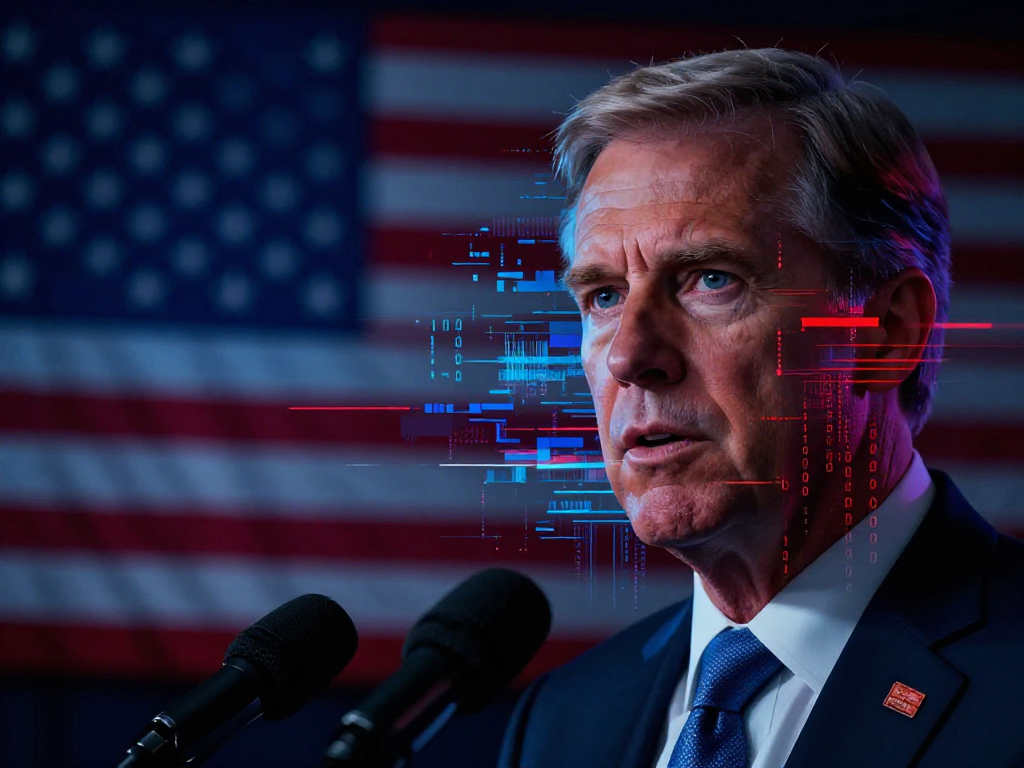
They no longer need to catch a politician saying something damaging. They can simply generate the footage. Welcome to the 2026 midterms — the first American election where the candidates on your screen may never have said the words coming out of their mouths, and where the most dangerous lie isn't any single fake video. It's what those fakes are quietly doing to your ability to believe anything at all.
In March 2026, the National Republican Senatorial Committee released an 85-second online ad featuring Texas Democratic Senate candidate James Talarico. On screen, a photorealistic "Talarico" — same blazer, same open collar, same face — reads aloud from his own old tweets and then adds glowing commentary praising them. There was just one problem: the real Talarico never recorded a second of it. The entire clip was synthetic, stitched together by artificial intelligence. The only disclosure was the phrase "AI GENERATED" in small, faint text tucked into a bottom corner for about three seconds.
That ad wasn't an outlier. It was a starting gun.
This Isn't a Glitch. It's the Strategy.
For years we were told deepfakes were a future problem — a hypothetical that "experts were monitoring." That future arrived and set up shop inside official party committees. By the spring of 2026, researchers had already documented at least five confirmed deepfake incidents across Texas, Georgia, and Massachusetts, deployed not by anonymous trolls in a basement but by sanctioned campaign organizations.
In Georgia, Representative Mike Collins released a deepfake of Senator Jon Ossoff appearing to say, "I just voted to keep the government shutdown" — a sentence Ossoff never uttered. In Texas, the Talarico fabrication. And when confronted, the response from operatives wasn't shame. It was a shrug. A source close to the NRSC described AI as a "consistently effective" way to attack opponents and insisted, "These are Talarico's real words… all we have done is visualize them for voters using a modern tool, within all legal and ethical parameters."
Read that defense again. "We simply visualized his words." That is the language of an industry that has decided fabricating a human being's face and voice is now a normal line item on a campaign budget.
The Words They Never Said
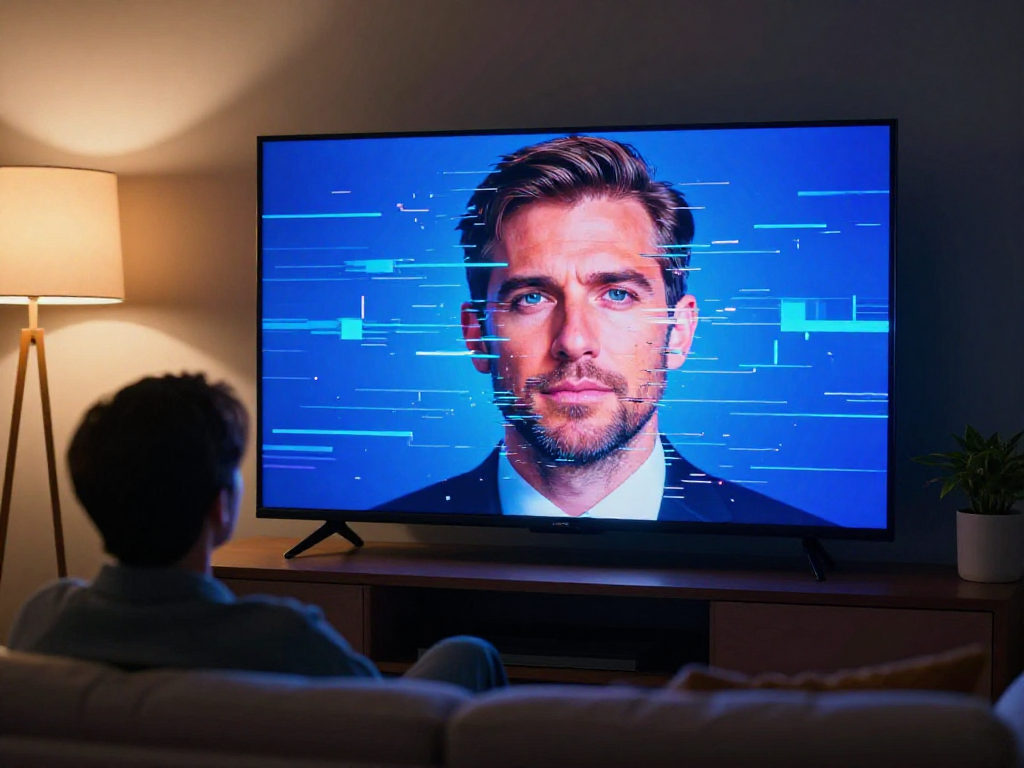
What makes the new generation of political deepfakes so effective isn't cartoonish villainy — it's plausibility. The Talarico fake didn't have him robbing a bank or confessing to a crime. It had him calmly reading real 2021 tweets about hot-button issues, then layering on invented self-praise that felt just in-character enough to pass. The technique weaponizes a target's actual record while smuggling in fabricated sentiment underneath it.
And the "disclosure"? Deepfake-detection expert Hany Farid and digital-rights groups noted the "AI GENERATED" watermark on these ads is "all but invisible" — small, faint, cornered, and gone in seconds. As one critic put it, "Political deepfakes are a profound threat to our democracy, because there is no realistic way for voters to understand they are seeing fake representations rather than real video." A watermark nobody sees is not a disclosure. It's a legal fig leaf.
The Liar's Dividend: The Real Payload
Here is the part they aren't putting in the press releases — and the part that matters most.
The goal of a political deepfake is not only to make you believe a lie. It's to make you doubt the truth. Researchers call it the "liar's dividend." Once the public knows that any video can be faked, then every video becomes deniable. A real recording of genuine wrongdoing? "That's a deepfake." A leaked clip of something they actually said? "AI-generated smear." The corruption of the evidence pool doesn't just launder lies — it gives the guilty a permanent escape hatch.
The endgame isn't to convince you the fake is real. It's to convince you that nothing is real — and that you have no way to tell the difference. A population that trusts nothing is a population that can be told anything.
That is why this story belongs here. The individual fake ads are bad. But the system-level payload — the slow, deliberate demolition of the shared reality we all use to hold power accountable — is the actual operation. When a candidate targeted by a deepfake has to burn precious weeks debunking a fabrication instead of debating policy, the lie has already done its work. By the time "it's fake" catches up, the fake has lapped it twice.
The Regulatory Void — Nobody Is Coming to Save You
You might assume there are laws for this. There essentially aren't — not at the level that counts. There is no federal statute governing AI-generated political advertising. What exists is a patchwork of roughly 28–30 state laws, most of them written hastily, worded inconsistently, and untested in a courtroom. The Federal Election Commission, split along partisan lines, has repeatedly failed to issue clear rules on AI in campaign ads.
The one real federal action — the FCC's ruling that AI-cloned voices in robocalls are illegal (after a fake "Joe Biden" robocall told New Hampshire voters to stay home in 2024) — does not extend to digital ads, television, or social media. In other words: a cloned voice dialing your landline is banned, but a fully synthetic video of a candidate flooding your feed is fair game. That is not an oversight. That is a gap wide enough to drive an entire election through.
How to Spot the Fakes
Until the rules catch up — if they ever do — the only defense is your own skepticism, sharpened. Detection experts at MIT, the Reuters Institute, and elsewhere point to a handful of tells worth training your eye on:
- The face: Watch the lip-sync closely. Look at the teeth, the blink rate (deepfakes often blink too little or too regularly), the hairline edges, and any warping in the background when the head turns.
- The voice: Synthetic speech tends to lack the messiness of real talk — the lip smacks, the "ums" and "uhs," the imperfect breathing and room noise. Unnaturally clean audio is a red flag.
- The structure: AI video can carry unusual compression patterns that differ from genuine camera footage.
- The instinct: If something feels off — trust that. Then verify through independent channels before you share. Platforms like YouTube have begun rolling out likeness-detection tools for politicians and journalists, but these remain, in the words of researchers, "an emerging front" — not a solved problem.
And the single most important habit: slow down. The entire business model of a political deepfake depends on you reacting — sharing, raging, believing — before you check. The share button is the delivery mechanism. Your restraint is the antidote.
What They're Really Telling You
The people deploying these tools want you to focus on the individual scandals — was this clip fake, was that one real. That's the misdirection. The bigger message, written between every glitching frame, is this: reality is now negotiable, and we control the negotiation.
They are betting that if they flood the zone with enough convincing fakes, you'll eventually give up trying to tell truth from fiction and simply believe whoever you already wanted to believe. That's not an accident of the technology. For the people writing the checks, it's the whole point.
The 2026 midterms will be remembered as the Deepfake Election. The question isn't whether you'll be lied to — you will be, on video, in a face you recognize. The question is whether you'll notice you're being trained to stop trusting your own eyes.
Because that's the lie underneath all the others.
Sources & further reading: CNN Politics (NRSC/Talarico deepfake); The American Prospect ("American Politics Is Already Inundated With AI Deepfakes"); Japan Times and US News (2026 midterm deepfake reporting); Public Citizen and Common Dreams (Talarico ad analysis); UC Berkeley / Hany Farid (detection); MIT Media Lab and the Reuters Institute (spotting deepfakes); Axios (YouTube likeness detection); reporting on the FEC regulatory gap and the FCC robocall ruling.